Friday, July 29, 2005

Cool Toy


27 July 2005 0071


This is one of the neatest toys I've come across lately. Magnetized plastic gears that freely spin, and a motorized gear to turn them all. The gear is well-clutched, so jams don't bother it. It's tap-on. tap-off, easy enough that the 1 year old plays with it no problem, and it makes some really neat combinations if you experiment around with it. There are different-sized gears, as you can see in the photo, and they're different colors. Not pictured are the red, orange, and purple gears. They're on the floor beside Michael. I just didn't get them all in the picture.

Two things I noticed with this toy are

1) the glue holding the magnet to the gear doesn't stand up to Full Nerdling Assault. Michael disassembled a lego bumper car while riding it at Legoland, so this is somewhat of a nitpick. I glued the magnets back on with some sort of strange white glue substance that Office Depot sold a while back. They've not come off since.

2) Geneva pulled off all the stickers and stuck them to herself. The gears are now not decorated. You put the stickers on yourself, so you can choose color combinations. However, the adhesive was apparently made out of the same stuff that the magnet glue was made out of.

Writing Journal Quote

Postatem obscuri lateris nescitis

[poh-STAH-tem ob-SKOO-ree lah-TAY-rees nes-KEE-tees]

Translation: You do not know the power of the dark side.

Panorama from three separate digital images. This massive thunderhead with anvil was photographed on 18 August 2004 at the Wild Animal Park in San Diego, CA. I'm looking forward to photographing some more thunderheads this August. Yesterday there were some amazingly impressive ones visible from Mira Mesa. Posted by Picasa

Thursday, July 28, 2005

Vogue 2494 Black Brocade Dress Report 4

Hemmed skirt, sleeves, and finished seams. Worked on the hole in front. Not entirely happy with it, but it seems to be working ok.

Next step is zipper on the left-hand side, hooks on upper back, and then shipping it out!

Tuesday, July 26, 2005

Stem Cell Research Article

Here's a short article that illustrates why I support adult stem cell research.

Stem Cells Restore Heart Function in Pigs
-- Dennis Thompson

TUESDAY, July 26 (HealthDayNews) -- Researchers report the successful use of stem cells to treat heart attack tissue damage in pigs -- a breakthrough that is paving the way for human trials.

"There is reason for optimism about these findings, possibly leading to a first-ever cure for heart attack in humans," senior author Dr. Joshua Hare, a cardiologist and professor of medicine at the Johns Hopkins University School of Medicine in Baltimore, said in a prepared statement.

"Ultimately," he said, "the goal is to develop a widely applicable treatment to repair and reverse the damage done to heart muscle that has been infarcted, or destroyed, after losing its blood supply."

In just two months, stem cells harvested from another pig's bone marrow and injected into the animal's damaged heart restored the animal's heart function and repaired damaged heart muscle from 50 percent to 75 percent, according to the study, which was published in this week's onlie issue of the Proceedings of the National Academy of Sciences.

Two patients already have been enrolled at Johns Hopkins to participate in a Phase I clinical trial of the therapy, which will test the safety of injecting adult stem cells at varying amounts in patients who have recently suffered a heart attack.

A total of 48 patients will participate in the study. Results are not expected until mid-2006, the researchers said.

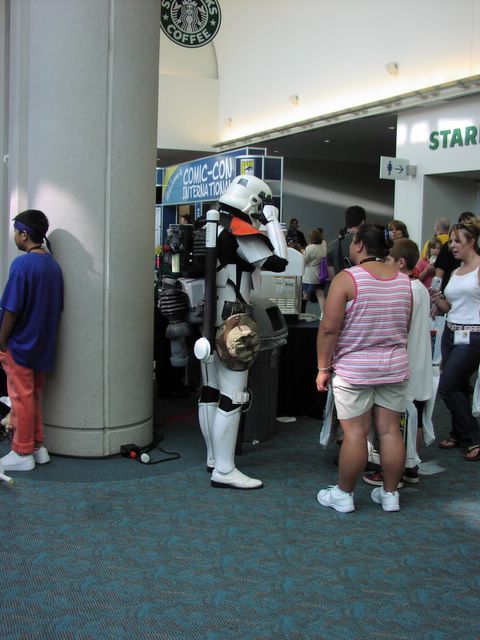
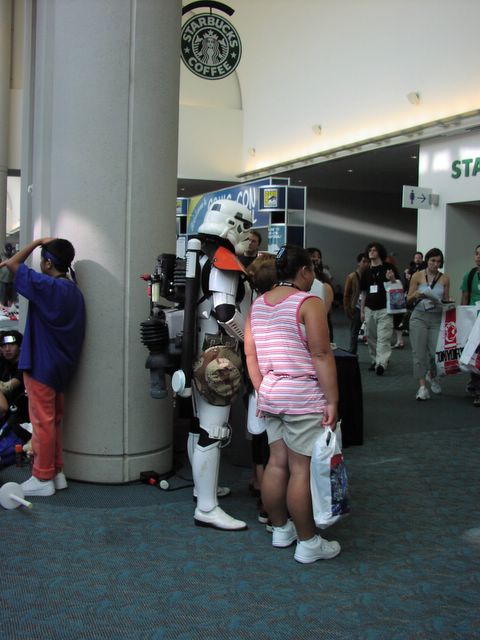
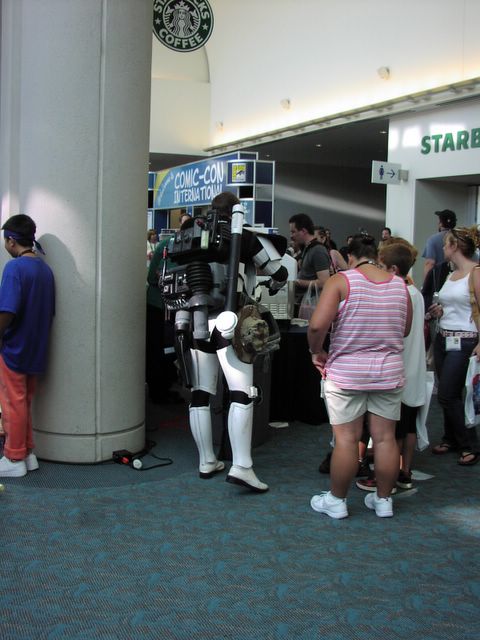
Comic-Con 2005 Science in Sci-Fi Panel Discussion Notes

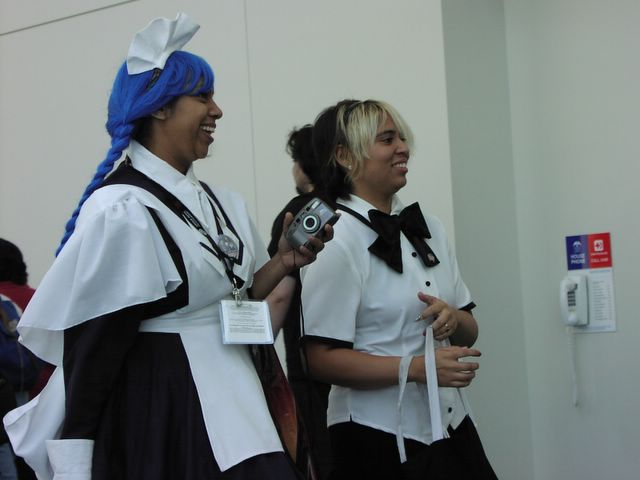
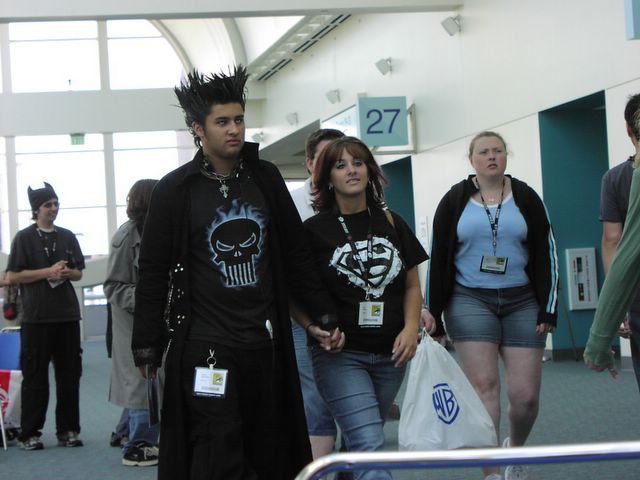
I've been procrastinating on the Comic-Con writeup because I wanted to spend some time really thinking about the sorts of things that I heard and saw. Also, because I put my notebook down in a weird place and didn't find it again until today. So! Without further ado, here are some observations about Comic-Con 2005!

First, I made a list of comics I wanted. This is always an exercise in optimism, since the amount of comics for sale at Comic-con is so enormous, and the organization of those comics so whacked, that the odds of you walking out with what you wanted when you walked in are quite low. Essentially, I was looking for Lone Wolf and Cub, Grey, Shi, Vampire Miyu, Dirty Pair, Gunsmith Cats, GI Joe European Missions, GI Joe vs. Transformers, Racer X, and anything in German.

I did get a few comics, and some of them are nearly the same as what I had on my list.

Here are my notes from the Science in Sci-Fi panel discussion.

Does it really matter how good the science is in science fiction? Hard Sci-Fi requires the technology to be more correct. There is the concept of Tech-Fi vs Sci-Fi was raised. When technology is the point of the story you have ceased writing Sci-Fi.

With regards to what is known as Comic Book Science - the more you try to explain Superman, the more you end up destroying Superman. Comic Book Science is just good enough to set the stage for the human relationships that the story is "really" about. I had the same reaction to the Mitichlorians explanation of "The Force" in Star Wars. I remember being and still am totally offended that The Force was reduced to some sort of genetic mutation. This made it impossible for The Force being something that a person could train to do, and made it less mysterious, special, and human. Even though DNA is the essentiality of being human, reducing such a magical thing to something easily identified in the bloodstream made me fume. Perhaps my reaction stems from a resistence to things like being a Jedi as deterministic things. I like the idea that a person can strive and achieve, and that simple genetics isn't the underlying reason. Another example that I thought of while sitting in the panel was Peter Pan and the magic of Neverland.

Characters trump the technology. For example, Heinlein. There is a fiction of science, and you should pick your battles when you write sci-fi. Some things are not and should not be addressed in order to move the story along. When you pick up a book, there are things you accept at face value. This is just the way good stories work, and there is not anything wrong with it. When it doesn't work well, is when you are asked to accept too much at face value, or asked to accept things for little or no reason.

The question of placing your story in time came up. Events will overtake you, so choosing something in the distant future is an easy way to avoid the problem of your particular work looking dated or silly if it's too close to the present, and things don't look like what you envisioned when we all get there.

"What is your string theory story?" The next question examined was that of whether or not significant scientific discoveries make good stories. String Theory, while really cool, doesn't have (to the panel anyway) much to offer readers. Writing a story about the science often devolves into a story about Cool Toys, or a story that runs like Frankenstein - in other words, the risks or danger of technology. These stories often are simplistic and don't result in a good book. Sometimes Sci-Fi can result in things that are indistinguishable from fantasy.

A useful element in Sci-Fi is "handwavium", which allows you to make things happen with having to go into gory detailed explanation. Examples are faster than light travel, unlimited energy sources, and the like. It can, however, be fun to play with limits. For example, the new Battlestar Gallactica has limits on energy, water, and speed.

The science, no matter what, does have to be there. But, plot and character is the reason for reading. Staying ahead is a challenge, in a world where things change very rapidly, and technology almost immediately devours scientific discoveries and churns them out in the form of commoditized products. If the reader starts to pick apart the details, then you start to have some trouble no matter how good the science is. Realistic near-future writing is like trying to stand on slippery sand. Putting a story farther in the future somewhat excuses things.

The next thing discussed was the strength of science as inspiration. Graphical simulations of real physics can produce something amazingly aesthetic. For example, worlds colliding or enormous explosions. Droplets of planets reaching out to touch each other, then splashing together to create the Earth/Moon system. Imagine Mars vs Earth. The odd things that happen all over, the crazy beautiful things that make science addictive.

Mistakes and contradictions in your writing can be productive. Stretches creativity.

Good quotes from the panel

"Look at all this vertical space, unused!" when talking about the crowding in the room.
"Well, thanks. that was really helpful." Sarcastic rejoinder to the singularity question vis a vis technology speeding up to the point where it destroys itself.
"In 50 years, we might be looking out over a 150 different species of human!"
"Aren't we already?" asked another panel member, indicating the enormous variety of different looks and clothing.
"Answer for the entire industry please" moderator posing comic book question to the panel.
"Dear Diary. Stumped Marv." moderator after waiting a few moments with no response from the giggling panel.
"I have no clue about how our government works" one panel member pronounced.
"Neither does George Bush," quipped another.

Biology was considered to be by the panel where the really cool stories will be.

"All of us have politics in our stories" said the panel. This was unchallenged, which was interesting considering Ray Bradbury, Ray Harryhausen, and Jerry Ackerman insisted that politics had no place in sci-fi. I found the two different presentations to be really interesting. Is the place of politics in sci-fi different for these two panels due to age, experience, or something else?

Forecasting politics in sci-fi is often wrong. Writers almost never get the processes and such of politics correct. A little bit of research goes a long way.

Then, one of the authors said "I went to my WWI discussion group with this question..."

I sat there and thought "This guy actually attends a World War I discussion group?" I was impressed.

He said something along the lines of government collapsing at the wrong time. I wanted to raise my hand and ask if a government could collapse at the right time. However, we moved on quickly to talking about how government handles conflict, friction, and diversity of viewpoint. Violence is not so useful as a plot device because it's a simplistic way of presenting government action. This has implications for a project I'm thinking about working on.

Deal with the results, not the process. Products of sci-fi are the characters that are impinged upon by the science.With the idea of technology singularly causing change, you have to present change in a believable manner. People rioting in the streets just isn't really that believable.

Zones of change, manipulation of one group by another, rapid changes that leave whole subcultures out of the story, and conflict between various groups with axes to grind is always more complicated than knee-jerk violence.

The panel noted that sometimes it is difficult to predict the future, yet pointed out that CJ Cherryh failed to back up a supercomputer in one of her books, which is a process that has been around in data management since before the written word.

Biotech and the moral/ethical dilemmas make for great stories. This is the hot zone of writing for the future, according to this panel. All fiction is about humans.

Monday, July 25, 2005


Composite of a huge thunderhead over East County, San Diego area in late July 2005.  Posted by Picasa

Vogue 2494 Black Brocade Dress Report 3

24 July 2005 0471

Here is the dress on the dressform. It's constructed, and looks ok. There are two areas of work that need to be done on the front, the hems need to be completed, and the positioning of the drape on the left shoulder (as you are wearing the dress) needs to be finalized. The pattern is really quite easy, and I have enjoyed putting it together very much.

I really like the black brocade fabric. The gold lining works quite well. The flower pattern does camoflage the dramatic paneling of the dress a bit. However, the flowers really glow in the light. The colors are great. The pattern is on the small side, but I think will work based on the sheer length and amount of fabric that is visible.

The facing for the small hole in the front was tricky. There is a seam visible on this one that should not be visible. I goofed up. I am going to put a zipper in the side instead of snaps just to make it go together more quickly. The zipper is there it make it easier to put on and take off, since it's fitted in the waist.

The fabric is washable, but I'd recommend dry cleaning instead of washing it in a machine, unless you're good at handling delicate fabrics.

24 July 2005 0341

Here's what the facing for the hole in front looked like going in.

24 July 2005 0521

Rear view of the dress on dressform.

24 July 2005 0481

Another view from the front, with dress on dressform.

Saturday, July 23, 2005

Vogue 2494 Black Brocade Dress Report #2

Drape for the black dress. Gold lining installed. I have a concern about the weight of the drape, since it's lined with satin-lined-crepe. I have a lighter-weight black polyester lining for the second dress. I like the color of the gold.

 21 July 2005 003

Back bodice facing going in under the foot of the Elna.

21 July 2005 006

Opposite view of back facing.


21 July 2005 008

Back bodice.

21 July 2005 012

Inside of back bodice. See facing?

21 July 2005 013

Sleeve and neckline, on instructions.

21 July 2005 0391

Work site!

21 July 2005 0141

Tuesday, July 19, 2005

Vogue 2494 Black Brocade Dress Report #1


Above is from the front of the pattern envelope.


19 July 2005 005


Kitchen island cleared off, cleaned up, ready to cut fabric.


19 July 2005 007

Detail of the fabric used for this project.


19 July 2005 0111

Construction of the larger pieces begins.


19 July 2005 0431

Back of the bodice and top of the skirt. Putting them together involves meshing together fabric that has been darted, seamed, and eased.


19 July 2005 0451

Here it is going together. The union of the bodice and the back skirt is an important seam. The other seams up until this point were simple. The fabric is slippery, so I pinned it completely.


19 July 2005 0461

Here it is. So far so good!


19 July 2005 0501

Neck facing prepared and seamed, ready to go in.

Monday, July 11, 2005

Hamblog Still Down

Hamblog is still down with no explanation.

A fellow ham attempted to email Charles (N5PVL), the Hamblog administrator and the messages bounced.

There was no communication to the users of the site before it went down.

A frequent poster did move their blog in between outages. Here is his blog posting at his new site. Permalink included below.

"Back in the saddle again............

Well I find myself shifting gears again. For some reason the site http://www.hamblog.com does not currently seem to be available. I noticed today, May 29th 2005, that when I tried to get into the site I get the message “Account has been suspended” and no further explanation.

Since I can't find anyone connected with the site who can tell me what their current or future status is I am shifting back to Blogspot for my web log. I still like the idea of Hamblog since it is a focus point for amateur radio operators and seems to draw a good readership. If and when the site returns I will decide if I am going to move the blog entries from there to here or continue with new posting going to Hamblog. I really don't have time to play ping-pong with two sites. Hopefully the loss of Hamblog is short term and it will return. Until that time look for my ramblings here. posted by Ken / WA3FKG @ Monday, May 30, 2005"


I noticed that Charles posted in some threads in the forums of the QRZ website. He's still active over at QRZ. There are links in the profile to send him messages. I'm sure others have already tried. I'm going to send a short note today, expressing some hope that hamblog isn't an abandoned project. I'm sure someone out there would take it over if need be. I hope Charles knows how useful and enjoyable the site is/was, and hasn't stopped managing hamblog because of something negative or unfortunate.

Monday, July 04, 2005

Hamblog Down Again?

What's going on with hamblog? The outages continue, with no high-profile explanations. Before, I got a "this account has been suspended". Now I get "www.hamblog.com cannot be found."

Looks serious, wonder what's up. I enjoy, recommend, and use hamblog, and don't want to see it decay or deteriorate into uselessness.

Sunday, June 26, 2005

Field Day 2005

Field Day is the fourth full weekend in June. It's a 24-hour emergency communications drill, cleverly disguised as an amateur radio contest-while-camping. It starts and stops at the same time for the entire US. We started/stopped at 11am Sat/Sun. East coast time of start/stop was 2pm Sat/Sun.

This is the first year that I've been able to participate in the full-blown operation. As a lurker, I took full advantage of the Seinfeld philosophy of when some people know your name, and when some people know your face, you can get away with a lot with the complicity of the people that can put the name WITH the face. I hope that made sense. If not, apply Merlot and it should become clear.

Interestingly to some, I didn't operate a station on the air this year. I instead volunteered to help run the Roadkill Cafe, which is the mess hall for the encampment. I was the event co-chair, but the other chair did the vast majority of the work (sleep in, still win!).

I packed the xTerra Friday morning with camp stove, portable kitchen, tent (more on that later), cot, sleeping bag, change of clothes, bag of various stuff like hair and tooth brushes, ear plugs, and Viagra. Just kidding! Purell hand cleanser, towel (never forget your towel - mine was yellow and came in handy multiple times), fuel for the stove, lantern, 40 lbs of water in a big blue container, radio, ipod, chargers, batteries, Franklin Planner, and folding chair.

I drove to the site with the kids, unpacked, talked to everyone, admired all the hard work going on to put up the towers, drove back to my part of town, dropped kids off at gym, went on date with Ken to Sears, bought Hoover floor scrubber, looked at the router tables, argued about Franklin Planner, had ice cream, picked up kids, went back home, had good night's sleep.

Saturday morning I baked the recipe George posted a couple of days ago. Since the title of the recipe was "Boiled Raisin Cake" and since we were "raising towers", I renamed the three batches I baked as "Boiled Raisin' Tower Cakes". Get it? Raising towers? Raisin cake? Anyone?

Yeah, I got the same response from my fellow hams.

Man, were they popular. If I had not have rationed them, they would have gone fast. I made three types. George, you would have loved it. The first was exactly like the recipe, and was cooked in a rectangular pan. It was almost undercooked at 35 minutes, but my stove tends to cook short, so I'll add another 10 minutes to it next time and see how it goes. The second batch was with splenda instead of sugar, but I used real eggs and Smart Beat butter, which has a better type of fat complex. It was cooked in a square, shallow pan, and had perfect texture at 35 minutes. The last batch was with canned egg whites, splenda sugar substitute, and no-fat butter stuff. It was in a bundt pan, and was a bit dry, but by the second day of Field Day, it was so damn good I couldn't believe it. The several diabetics (more on that later) really loved it. Everyone loved the taste, everyone was amazed at the rich brown texture and the balance between bread and raisins.

Now, I did have to sub in "pumpkin pie spice" for nutmeg, since I didn't have any plain nutmeg, but pumpkin pie spice has nutmeg in it, so I thought it was a good substitute. It's one I've used before, so I thought it would work out ok in the cake.

Anyway, I showed up at the Field Day Site, set up, and waited for the "owner" of the traditional camp kitchen (Mark KF6WTN) to show up. Then we got to work cooking. We cooked all morning, all afternoon, all evening, all night until 10pm. I took a break from 10pm until 1am. It wasn't really sleeping, because sleeping was impossible at that point, but it did the trick. I took over from 1am and managed to provide food all night while shivering in the cold nighttime air.

I learned two things. I need to buy a flashlight. I need to get the missing parts to my tent. I ended up cowering in the mess tent due to Tent Malfunction. I also need to take along a long-sleeved shirt, regardless of the weather forecast.

Anyway, morning arrived, gloriously, and we cooked breakfast and then brunch.

The way these sorts of things work is different than what I previously have done in camping. Usually, you can prep for breakfast, do breakfast, clean up, take a break. Prep for lunch, do lunch, clean up after lunch, take a break, rinse and repeat for dinner etc. However, during an emergency, food is needed round the clock. Any sense of schedule gets thrown out the window. If this had been an actual emergency, we might have had refugees, people added to the communications crews at odd or off times, been ordered to move the entire operation to another location, and other challenges. The kitchen therefore operated as a short-order kitchen with a flexible and slowly-changing menu. We transitioned from breakfast to lunch to dinner to snacks, rather than having hard-handoffs from time to time. It worked really well, and I have to credit my friend Mark, who has run the camp kitchen for several Field Days to date, with developing the philosophy. It worked!

Constant cleaning and maintenance was crucial. If something got dropped into one of the two camp sinks, then it got cleaned. If the garbage filled up, it got pulled and dumped in the central trash area. If someone wanted something, it got cooked. Coffee was constantly on, water was constantly heated, and drinks were available in ice chests the entire time.

My take on it is that if the "event"/emergency lasts 24-48 hours, then this sort of high-availability sort of cooking can be done. Anything after that, and you have to start drawing lines in the sand about shifts and rest. However, for a day or two, you can provide an extremely high level of service without knocking yourself out - as long as you have at least two kitchen people per 50 emergency workers. One person can do it, but it's really hard. More than three, and there is idle time. I don't know exactly how this stacks up with others' experiences, but it worked out really well in this case.

We fielded six complete communications teams, had six stations, six major huge-ass towers with Yagis, etc., operated on all bands, almost all modes, contacted almost all regions of the US, and kept it up for 24 hours solid. We handled all our own power, lighting, food, fluids, entertainment (laugh) and brought our own portapotty with us.

By 1:51pm Sunday, the towers (many quite large) were down and on trailers. By 2:15, all towers were on the road. We scored a cherry-picker vehicle of some sort to help us put the towers up and take them down. The site was left in way better shape than when we found it.

The site this year was a large industrial lot in urban San Diego. It was hard dusty dirt in composition, and had a high elevation. It was right by the freeway, and attracted a lot of attention from passers-by, who visited us and got the Nerd Ham Radio Operator Treatment (NHROT) from various fat white men when they wandered into our grasp.

If you are remotely interested in emergency preparedness, want to test your "go-kit", are thinking about getting a ham radio license, like hanging out with weirdos, miss stressful camping situations, or have a military background, then this might be the annual event for you.

I got four job offers, heard more dirty jokes than I can remember, cooked more food than I do all year, and had a HELL of a good time. And, I didn't even touch a radio. Field Day happens all over, ever year. There is another major emergency drill done by ARRL, so that's two opportunities at least for this sort of zany fun. And, with the rise of CERT teams, you can do it THREE times a year...

OK, maybe that's too much. When the scores are in, I'll let you know how it went...

-Michelle W5NYV qrt

pano (2)1

Thursday, June 09, 2005

Travel, Storms, etc

Heading to Mississppi tomorrow. Will probably be there for Arlene. Expected to hit Mississippi on Sunday.

June 9, 2005 | MIAMI -- Tropical Storm Arlene developed Thursday in the northwest Caribbean Sea, edging closer to western Cuba as the Atlantic hurricane season's first named storm.

Arlene strengthened from a tropical depression that formed Wednesday. By Thursday morning, it had maximum sustained winds of 40 mph.

At 8 a.m. EDT, the storm's center was about 190 miles south-southeast of the western tip of Cuba. It was moving north at about 8 mph, and this motion could bring the storm's center near western Cuba as early as Thursday night, forecasters said.

The Cuban government has issued a tropical storm watch for the western province of Pinar Del Rio to the capital of Havana.